Fiber Optic Connector Cleaning Best Practices: Tools, Methods, and Golden Rules
Most common optical fibers have a core size between 9-62.5 microns, so even a tiny particle can affect performance. That's why contamination is a leading cause of fiber optic troubleshooting. This guide—part one of Neptec's series on fiber optic hygiene — explores the critical tools, primary cleaning methods, and universal best practices every technician must know to protect their infrastructure.
⚠️ CRITICAL SAFETY WARNING: Never look directly into a fiber cable or bulkhead adapter with the naked eye or a microscope unless you have confirmed the laser source is turned off and disconnected. Invisible laser radiation can cause permanent eye damage.

Why Fiber Optic Cleaning Matters
Fiber carries data as light, and anything on a connector end face can interfere with that path. Contamination can cause three problems:
Insertion loss: Contamination increases attenuation, so less signal reaches the far end.
Return loss: Debris near the core can reflect light back toward the source.
Physical damage: Loose particles can shift when a connection is made, and rigid debris trapped between two end faces can permanently pit or crack the core.
Contamination can also migrate from one connector to the next when dirty and clean end faces are mated. For that reason, every end face should be inspected and cleaned before a connection is made.
Fiber Optic Cleaning Tools You Need
Purpose-built tools matter because general shop supplies shed lint and leave residue. A complete kit includes:

Inspection microscope or video probe (200x+): Essential for the inspect-clean-inspect loop.
Reel/cassette cleaner (e.g., GREENLEE 948 REEL CLEANER CONN): A cloth-based cleaner provides a controlled wiping surface. It comes with separate female and male versions—the male version uses different backing in the cleaning window to accommodate the connector's guide pins.
Push-style cleaners (e.g., IBC-style cassette cleaner): Ideal for MTP/MPO connectors and in-adapter cleaning.
Cleaning sticks (2.5 mm and 1.25 mm): To reach connectors installed in bulkhead adapters.
Optical grade cleaning fluid (e.g., AFL FCC2) or equivalent: For wet cleaning. 99% electronic-grade IPA can also be used in some workflows, but dedicated fiber cleaning fluids are preferred.
Lint-free wipes (e.g., Kimwipes): Alternative tool to reel/cassette cleaners, suitable for dry and wet cleaning.
Dry compressed air: For the non-contact method.
Fine pinhole brush (e.g., a TePe dental brush): For clearing MPO alignment holes.
Anything that touches an end face must be lint- and contaminant-free and reserved only for cleaning.
The Golden Rule: Inspect Before You Connect
Don't assume a connector is clean, even if it is factory-terminated or freshly unpacked. Dust caps help protect connectors, but don't guarantee a clean end face.
Always follow the industry-standard workflow:
Inspect → Clean only if it fails → Re-inspect → Connect.
This is aligned with IEC 61300-3-35 inspection standards used in the industry for fiber end face evaluation. Use a specialized fiber inspection microscope or video probe offering at least 200x magnification to verify the core and cladding.
Core Cleaning Methods: Dry, Wet, and Non-Contact
Start with the least aggressive and escalate only if inspection still shows contamination:
Non-contact cleaning
A short burst of dry compressed air— can help dislodge loose particles, but it is not a primary cleaning method in modern practice. If used, it should be controlled and never relied on as the only step, since air can introduce moisture or redistribute contamination.
Dry cleaning
Dry cleaning removes airborne dust and loose contamination. It is fast and solvent-free, so it is a good first step.
Wet cleaning
Wet cleaning removes oils and fingerprints that dry cleaning may not remove. The best practice is wet-to-dry cleaning: Wipe the connector on a wet surface with a small amount of cleaning fluid to loosen contamination, then wipe onto a dry surface so no residue remains.
Common Fiber Optic Cleaning Mistakes to Avoid
Skipping inspection: Always inspect first, then clean only if needed.
Using the wrong solvent: Drugstore Isopropyl Alcohol (IPA) isn't pure enough for optics, since it leaves a residue and attracts moisture as it dries. Use a dedicated cleaning fluid such as AFL FCC2 or 99% pure electronic-grade IPA.
Wiping back and forth: Use one-direction wiping so debris is removed rather than redistributed.
Touching end-face surfaces: Oils from your fingers will instantly ruin the end face.
Over-wetting or skipping the dry step: Finish wet cleaning on a dry surface so no residue is left behind.
Ignoring the bulkhead or port: Dust hides inside the mating adapter sleeve. Clean both the patch cord plugs and the inside bulkhead port to ensure a clean link.
Reusing Cleaning Supplies: Cleaning sticks, wipes, and exposed reel windows are strictly single-use consumables. Reusing them introduces cross-contamination.
Ready for cleaner links and fewer callbacks? Download our free Fiber Cleaning & Inspection Checklist to standardize your field workflow or contact the Neptec Team for expert help specifying high-performance optical assemblies engineered for reliable, repeatable performance.
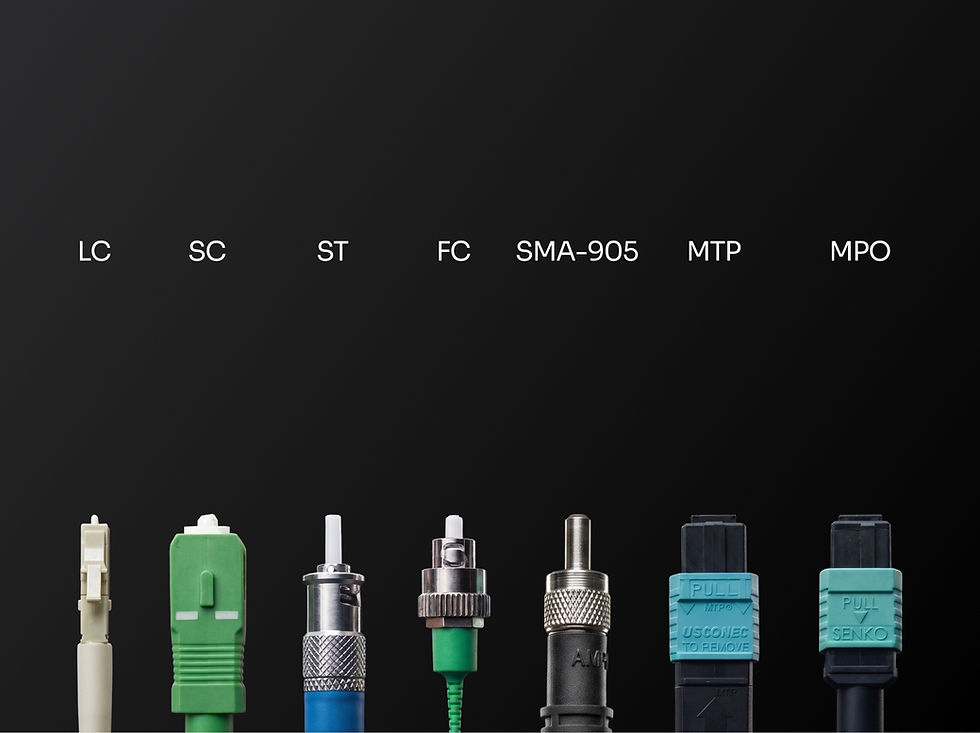
Stay tuned for part two of our fiber hygiene series! We are going to cover the exact, step-by-step physical procedures for cleaning specific connector types, including exposed single-fiber ferrules (LC/SC/FC) , complex MTP/MPO arrays , and high-density bulkhead adapters.